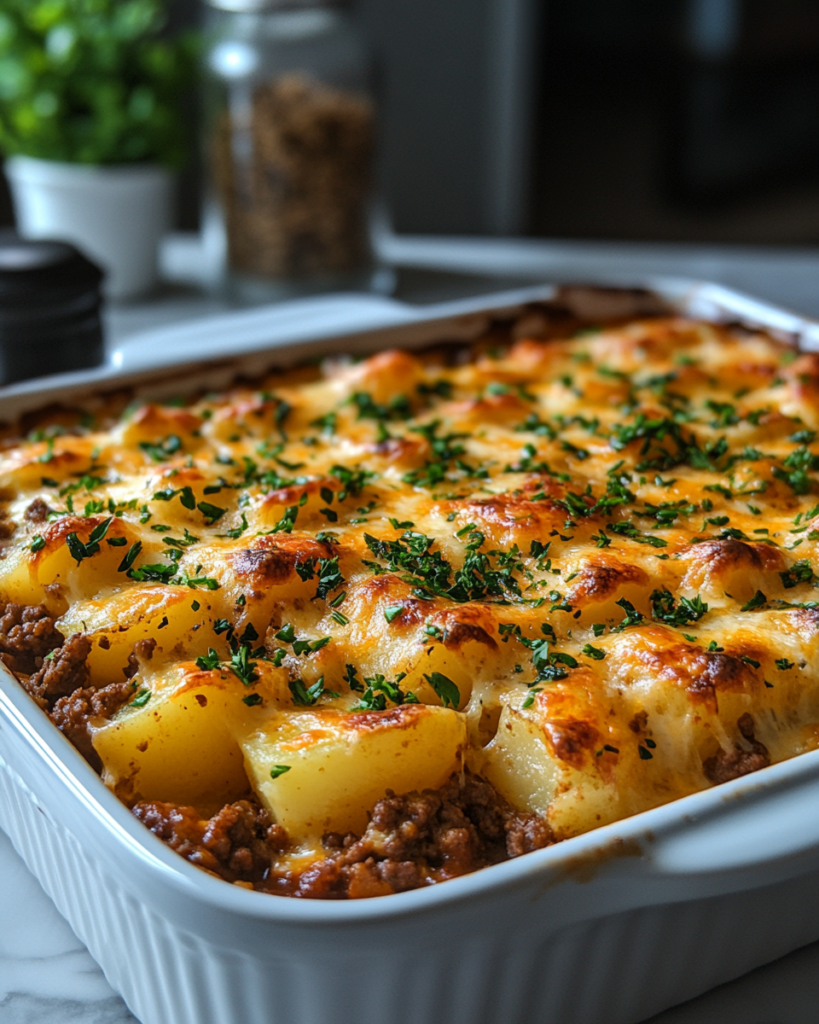
A cheesy beef and potato bake is a warm, oven-cooked dish built for comfort and shared plates. Layers of seasoned ground beef, soft potatoes, and melted cheese come together in a rich, filling casserole that suits busy weeknights or relaxed weekend dinners.
This recipe brings together everyday ingredients in a way that feels hearty without being complicated. The potatoes soak up savory juices from the beef while baking, creating soft layers at the bottom and slightly crisp edges on top.
A golden cheese topping finishes the dish, adding richness and a smooth texture that ties everything together. It is the kind of meal that comes straight from the oven to the table with minimal fuss.
The balance of protein, starch, and dairy makes it satisfying on its own, though it also pairs well with simple side dishes like green salad or steamed vegetables.
Ingredients Overview
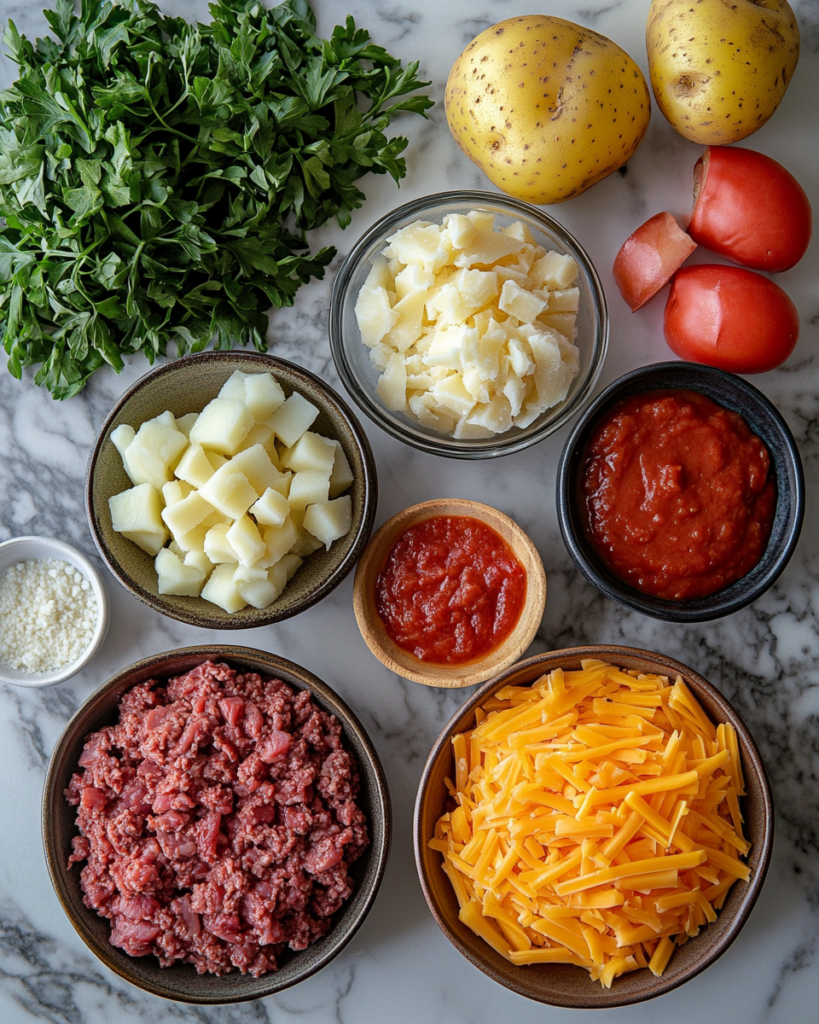
This dish relies on a few core ingredients that work together to build depth of flavor and texture. Ground beef forms the savory base, bringing richness and a hearty bite. Choosing beef with moderate fat content helps maintain moisture while baking, preventing dryness.
Potatoes act as the structure of the bake. As they cook, they soften and absorb seasoning from the beef mixture. Thin, even slices help them cook evenly and create a tender, layered result. Starchy potatoes tend to work best because they become soft and slightly creamy inside the bake.
Onions and garlic add aromatic depth. When cooked with beef, they blend into the mixture and help balance the richness. Seasonings like salt, pepper, and paprika give warmth and mild spice without overpowering the dish.
Cheese is the finishing layer that brings everything together. Cheddar is commonly used for its strong flavor and smooth melt. It forms a golden top that contrasts with the softer layers beneath.
Milk or broth may be added in small amounts to keep the bake moist during cooking. This also helps the potatoes soften evenly. Some versions include a light sauce base, but the natural juices from beef and vegetables are usually enough.
Together, these ingredients create a layered bake with soft potatoes, savory beef, and a creamy, melted top.
Ingredients
1 ½ pounds ground beef
4 medium potatoes, thinly sliced
1 medium onion, chopped
3 cloves garlic, minced
1 ½ cups shredded cheddar cheese
1 cup milk
1 tablespoon olive oil
1 teaspoon salt
½ teaspoon black pepper
1 teaspoon paprika
1 teaspoon dried oregano
2 tablespoons tomato paste
1 tablespoon Worcestershire sauce
½ cup beef broth
1 tablespoon butter (for greasing dish)
Step-by-Step Instructions
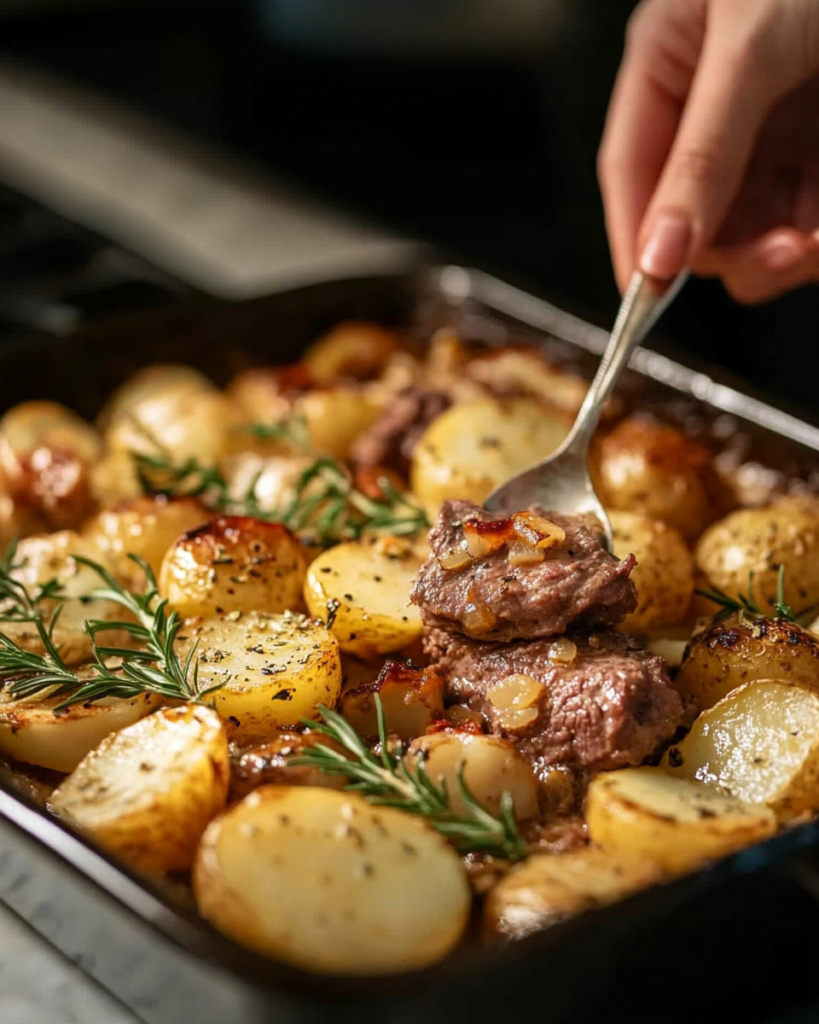
Start by heating olive oil in a large skillet over medium heat. Add chopped onion and cook until softened, stirring occasionally. Add minced garlic and cook briefly until fragrant.
Add ground beef to the skillet. Break it apart with a spoon and cook until browned. Drain excess fat if needed. Stir in tomato paste, Worcestershire sauce, salt, pepper, paprika, and oregano. Mix well so the seasoning coats the meat evenly.
Pour in beef broth and let the mixture simmer for a few minutes. This helps deepen the flavor and keeps the meat moist. Remove from heat once slightly thickened.
Preheat the oven to 375°F (190°C). Grease a baking dish with butter to prevent sticking.
Arrange a layer of sliced potatoes at the bottom of the dish. Overlap slightly for even coverage. Spoon a portion of the beef mixture over the potatoes. Repeat layers until ingredients are used, finishing with potatoes on top.
Pour milk evenly over the layers. This helps soften the potatoes as they bake. Cover the dish with foil and bake for about 45 minutes.
Remove foil, sprinkle shredded cheese over the top, and return to the oven. Bake uncovered for another 15–20 minutes until the cheese melts and turns lightly golden.
Let the dish rest for 10 minutes before serving. This helps the layers set and makes slicing easier.
Tips, Variations & Substitutions
Slice potatoes as evenly as possible so they cook at the same rate. A mandoline slicer can help with consistency. If slices are too thick, they may stay firm after baking.
Ground turkey or chicken can replace beef for a lighter version. The seasoning may need slight adjustment since lean meats have a milder taste.
For extra vegetables, add thin slices of zucchini, carrots, or bell peppers between layers. These blend well without changing the structure of the bake.
Different cheeses can be used depending on preference. Mozzarella creates a softer melt, while a mix of cheddar and Monterey Jack adds balance between flavor and texture.
If a stronger flavor is desired, add a pinch of smoked paprika or a small amount of chili flakes. This adds warmth without overpowering the dish.
Serving Ideas & Occasions
This bake works well as a main dish for family dinners, especially when serving a group. It pairs nicely with a fresh green salad, roasted vegetables, or simple steamed greens to balance its richness.
Bread rolls or crusty bread can be served on the side to soak up any extra sauce from the dish. A light yogurt-based dip or sour cream can also complement the flavors.
It is commonly served during casual gatherings, weekend meals, or make-ahead dinners. Leftovers reheat well, making it practical for next-day meals.
Nutritional & Health Notes
This dish provides a balance of protein from beef, carbohydrates from potatoes, and fats from cheese and milk. It is filling and suitable for a main meal portion.
Potatoes contribute potassium and fiber, especially when cooked with the skin on. Beef supplies iron and protein, which support energy and muscle maintenance.
Cheese adds calcium and flavor but also increases fat content, so portion size can be adjusted based on dietary needs. Using lean beef or reducing cheese slightly can lighten the overall profile.
Adding vegetables between layers increases fiber and nutrient variety without changing the structure of the dish.
FAQs
Can I prepare this dish ahead of time?
Yes, this dish can be assembled ahead of time and stored in the refrigerator before baking. Prepare all layers, cover tightly, and refrigerate for up to 24 hours. When ready to bake, allow the dish to sit at room temperature for about 20 minutes before placing it in the oven. This helps it cook more evenly. Baking time may need a slight increase if the dish is still cold. The flavor often develops further after resting, making it a convenient option for planning meals in advance.
What type of potatoes work best?
Starchy potatoes such as Russet or similar varieties work well for this bake. They soften during cooking and absorb the flavors from the beef mixture. Waxy potatoes can also be used, but they tend to stay firmer and may not create the same soft layered texture. Cutting potatoes into thin, even slices is important for consistent cooking. If slices are uneven, some pieces may remain firm while others become soft. Uniform thickness helps maintain a balanced texture throughout the dish.
Can I freeze leftovers?
Yes, leftovers can be frozen after cooling completely. Cut the bake into portions and store in airtight containers or freezer-safe wraps. It can be frozen for up to two months. When reheating, thaw in the refrigerator overnight for best results. Warm in the oven until heated through to help maintain texture. Microwaving is also possible, though the texture of potatoes may soften further. Freezing works best when the dish is slightly undercooked initially, so it does not become too soft after reheating.
Can I add more vegetables to the recipe?
Yes, additional vegetables can be added between the layers. Thin slices of zucchini, carrots, spinach, or bell peppers work well. They should be cut thin so they cook at the same rate as the potatoes. Vegetables with high moisture content may release liquid during baking, so adjusting milk slightly can help maintain consistency. Adding vegetables increases variety and adds natural flavor without changing the structure of the dish. It is a simple way to adjust the recipe based on preference.
How do I know when the bake is fully cooked?
The bake is ready when the potatoes are soft and can be easily pierced with a fork. The top layer of cheese should be melted and lightly golden. If the potatoes still feel firm, the dish needs more baking time. Covering it with foil during the first stage helps trap heat and soften the layers evenly. Removing the foil near the end allows the top to brown. Resting the dish after baking helps the layers settle for easier serving.
Can I use a different cheese?
Yes, different cheeses can be used depending on flavor preference. Cheddar is commonly chosen for its strong taste and good melting quality. Mozzarella creates a softer, milder topping. A blend of cheeses can also be used for more depth of flavor. Hard cheeses like Parmesan can be added in small amounts for extra savory notes. It is best to use cheeses that melt well so the top layer stays smooth and creamy.
What can I serve with this dish?
This bake pairs well with simple sides that balance its richness. A fresh green salad with light dressing adds freshness. Steamed vegetables such as broccoli or green beans also work well. Bread rolls or toasted slices are useful for scooping up extra sauce from the dish. For drinks, water or light herbal tea complements the meal without overpowering its flavor. The dish is filling on its own, so sides are usually kept simple and light.