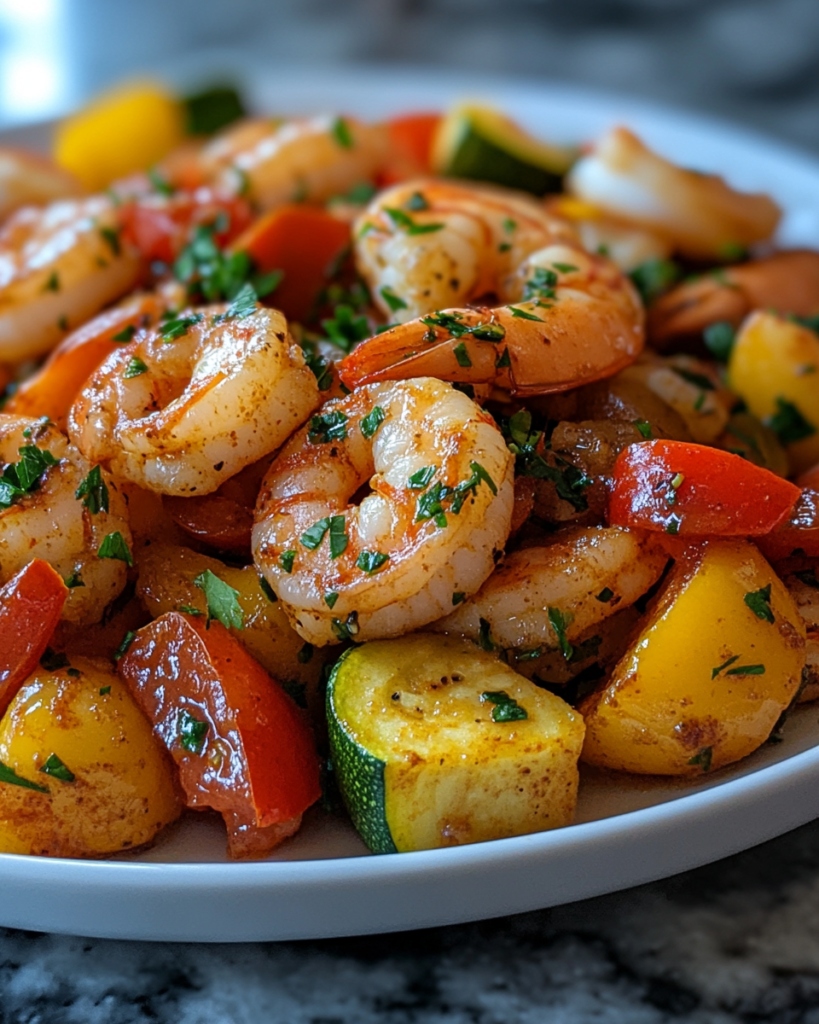
When you want something light, colorful, and full of fresh flavor, a shrimp veggie skillet is one of the easiest and most satisfying meals you can make. It’s the kind of dish that comes together quickly in a single pan, yet tastes like something you’d order at a seaside restaurant. The aroma of garlic sizzling in olive oil, paired with juicy shrimp and vibrant vegetables, makes this recipe feel both comforting and refreshing.
Inspired by simple Mediterranean and coastal cooking, this dish highlights the natural sweetness of shrimp and the freshness of vegetables without heavy sauces or complicated steps. It’s perfect for busy weeknights, healthy meal prep, or a quick dinner that doesn’t sacrifice flavor. Every bite feels clean, bright, and nourishing.
Why You’ll Love This Recipe
Shrimp veggie skillet is all about simplicity and balance. It’s quick to prepare, requires minimal cleanup, and delivers a complete meal in under 30 minutes.
The shrimp cook quickly and absorb the flavors of garlic, herbs, and lemon beautifully. The vegetables add color, texture, and natural sweetness, making every bite interesting and satisfying. It’s also naturally high in protein and packed with nutrients, making it a wholesome choice for any day of the week.
Another major benefit is flexibility—you can use whatever vegetables you have on hand, making it a great “clean-out-the-fridge” recipe.
Ingredients
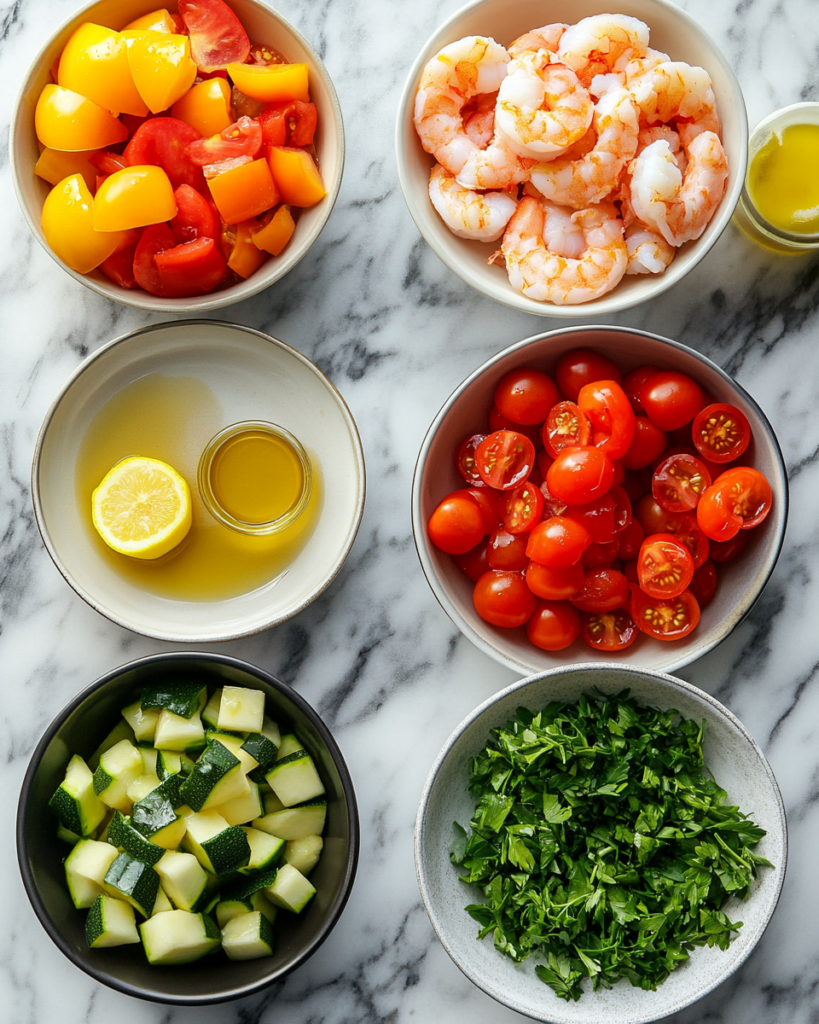
Main Ingredients
- 500 g shrimp, peeled and deveined
- 2 tablespoons olive oil (30 ml)
- 3 cloves garlic, minced
- 1 teaspoon paprika (5 g)
- ½ teaspoon salt (3 g)
- ½ teaspoon black pepper (2 g)
- 1 zucchini, sliced (150 g)
- 1 red bell pepper, sliced (150 g)
- 1 yellow bell pepper, sliced (150 g)
- 1 cup cherry tomatoes, halved (150 g)
- 1 small red onion, sliced (100 g)
- 1 teaspoon dried oregano (3 g)
- 1 tablespoon lemon juice (15 ml)
- 1 teaspoon lemon zest (optional, 5 g)
- 1 tablespoon butter (15 g)
- 2 tablespoons fresh parsley, chopped (8 g)
- Optional: chili flakes for heat
Step-by-Step Instructions
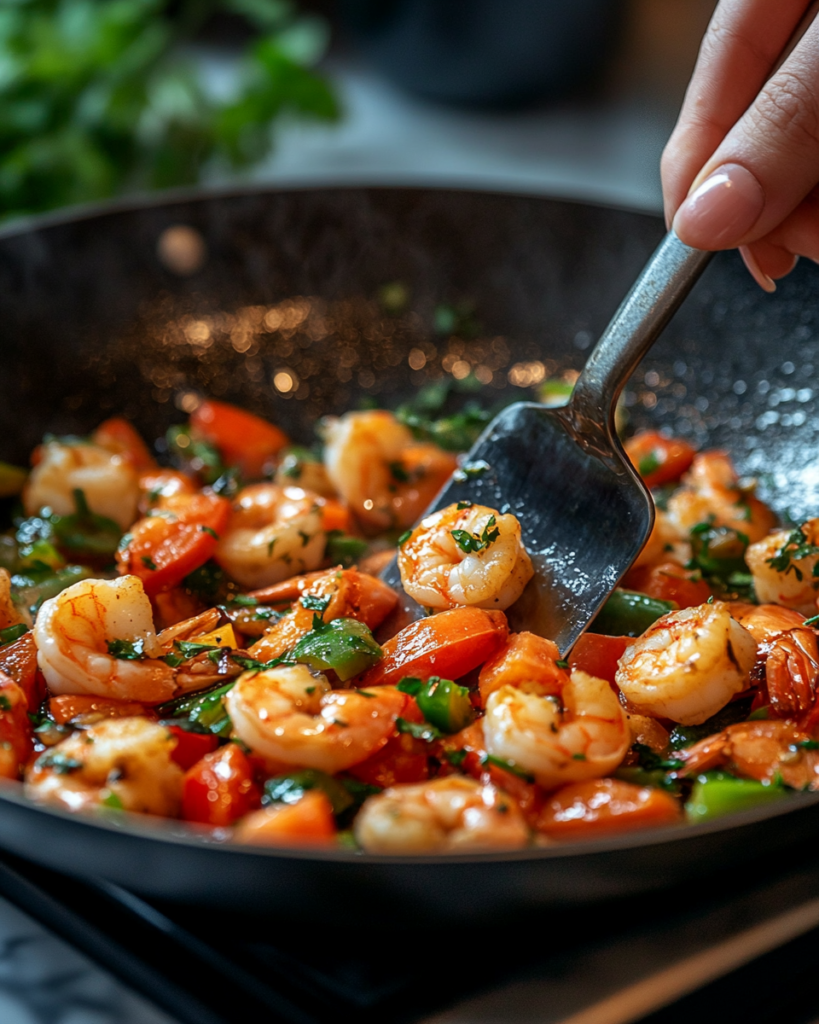
1. Season the Shrimp
In a bowl, toss shrimp with paprika, salt, and black pepper. Set aside while preparing the vegetables.
2. Sauté the Vegetables
Heat olive oil in a large skillet over medium-high heat. Add onion and cook for 2–3 minutes until slightly softened. Add garlic and cook for another 30 seconds until fragrant.
3. Cook the Veggies
Add zucchini, bell peppers, and oregano. Stir-fry for 4–5 minutes until the vegetables are tender but still slightly crisp. Add cherry tomatoes and cook for another 2 minutes.
4. Cook the Shrimp
Push vegetables to one side of the skillet and add the shrimp. Cook for 2–3 minutes per side until they turn pink and opaque.
5. Combine and Finish
Mix everything together in the skillet. Add butter, lemon juice, and lemon zest. Stir until everything is well coated and glossy.
6. Garnish and Serve
Sprinkle fresh parsley and optional chili flakes on top. Serve immediately.
Tips for the Best Shrimp Veggie Skillet
Use high heat to get a light sear on both shrimp and vegetables, which enhances flavor. Avoid overcooking shrimp—they cook very quickly and become rubbery if left too long on the heat.
Cut vegetables evenly so they cook at the same rate. Fresh lemon juice added at the end brightens the entire dish and balances the savory flavors.
Variations and Substitutions
This recipe is highly adaptable. You can add spinach, mushrooms, broccoli, or asparagus depending on what you have available. For extra richness, add a splash of cream or a sprinkle of Parmesan cheese.
If you prefer more spice, increase chili flakes or add a pinch of cayenne pepper. For a different flavor profile, you can swap oregano with basil or thyme.
You can also serve it over rice, quinoa, or pasta for a more filling meal.
Serving Suggestions
Shrimp veggie skillet is delicious on its own as a low-carb meal or served with sides like steamed rice, cauliflower rice, or crusty bread.
It also pairs well with a light green salad or a yogurt-based dip for added freshness.
For presentation, finish with extra lemon wedges and fresh herbs to enhance color and flavor.
Frequently Asked Questions
1. How do I keep shrimp from becoming rubbery in a skillet?
The key to perfectly cooked shrimp is timing and heat control. Shrimp cook very quickly—usually within 2 to 3 minutes per side depending on their size. Overcooking is the most common reason they turn rubbery.
To avoid this, always cook shrimp over medium-high heat and remove them from the pan as soon as they turn pink and opaque. If you are cooking them with vegetables, you can push the vegetables aside and cook the shrimp separately in the same skillet to better control their doneness.
Another helpful tip is to ensure shrimp are fully thawed and patted dry before cooking. Excess moisture can cause them to steam rather than sear, affecting texture.
2. What vegetables work best in a shrimp veggie skillet?
This recipe is very flexible, and many vegetables work well depending on your preference and what you have on hand. Bell peppers, zucchini, cherry tomatoes, and onions are classic choices because they cook quickly and add natural sweetness and color.
You can also include mushrooms, spinach, asparagus, broccoli, or snap peas for extra variety. The key is to balance cooking times so everything finishes at a similar texture. Firmer vegetables like broccoli should be added earlier, while leafy greens like spinach should go in at the end.
Using a mix of colors and textures not only improves flavor but also makes the dish more visually appealing and nutritious.
3. Can I make this recipe ahead of time?
Yes, shrimp veggie skillet can be prepared ahead of time, but it is best enjoyed fresh for optimal texture. Shrimp tend to lose their ideal tenderness when reheated, so for meal prep, it’s often better to cook the vegetables ahead and add freshly cooked shrimp when serving.
If you do store leftovers, place them in an airtight container and refrigerate for up to 2 days. When reheating, do so gently over low heat or in short bursts in the microwave to avoid overcooking the shrimp.
Adding a splash of lemon juice or a small amount of olive oil when reheating helps refresh the flavors.
4. Can I serve shrimp veggie skillet with other foods?
Yes, this dish pairs beautifully with a wide range of sides depending on how hearty you want the meal to be. For a light option, it can be enjoyed on its own or with a simple salad.
For a more filling meal, serve it over steamed rice, quinoa, couscous, or pasta. It also works well with cauliflower rice for a low-carb alternative.
Bread is another great option, especially for soaking up the flavorful juices from the skillet. Warm pita or crusty bread complements the dish particularly well.
Final Thoughts
Shrimp veggie skillet is the perfect example of how fresh ingredients and simple cooking techniques can create a meal that feels both light and deeply satisfying. It’s quick enough for a busy weekday but flavorful enough to feel special.
What makes this dish especially appealing is its balance. The shrimp provide lean protein, the vegetables add freshness and texture, and the lemon and herbs bring brightness that ties everything together. Each bite feels clean, vibrant, and nourishing.
It’s also incredibly versatile. You can adjust the vegetables, seasonings, and level of richness depending on your preferences. Whether you keep it simple or add extra ingredients, it remains an easy and reliable recipe.
Beyond convenience, it’s a dish that encourages healthy eating without feeling restrictive. Everything cooks in one pan, making cleanup minimal and preparation stress-free.
Once you try it, shrimp veggie skillet is likely to become a regular part of your cooking routine. It’s fast, flexible, and full of flavor—the kind of recipe that makes everyday cooking feel effortless and enjoyable.